
Tell the story in the right order
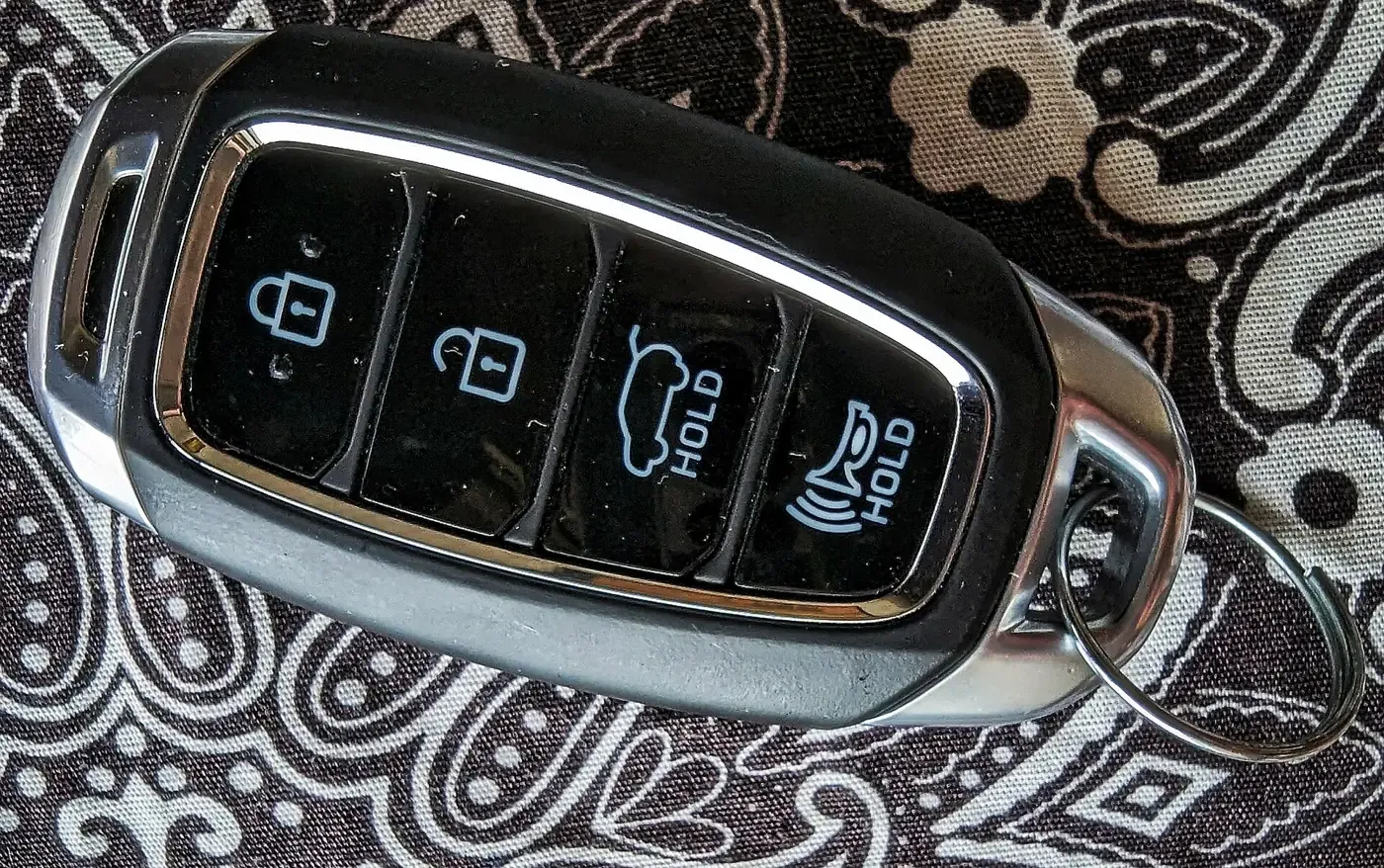
First explain whether you can get inside. Then say whether a key exists and which functions still work. Remote buttons, the mechanical key, and the starting system can behave differently. A dashboard message is useful to report, but it does not by itself establish the cause.
If a spare is available, say whether it operates the vehicle normally. Do not repeatedly force a key that will not turn, or assume that every starting problem belongs to the key system.
Use the parking place, not the walking destination
After a walk on the Olentangy Trail, the place you reached on foot may be far from the car. Identify the trailhead or actual lot, such as the posted entrance at Worthington Flats, then add a visible sign or parking row.
At a shared business address, explain which side of the building holds the vehicle. Include its color and body style, and mention gates or access restrictions before arrangements are made.
Separate entry from a replacement key
Opening a vehicle, supplying a mechanical key, and programming a remote are different requests. Ask which work is supported for your model, what ownership information is needed, and what the proposed charges cover. Avoid improvised rods or wedges that can damage glass, seals, or door components.
A few useful answers.
What if the key is in the trunk?
Mention that at the start. Available access options vary with the vehicle and where the key is located.
Does a silent remote mean I need a new key?
Not necessarily. Report any recent battery changes and whether the spare or mechanical key works; assessment may be needed.
What if someone is trapped inside?
If someone is in immediate danger, contact emergency services first rather than waiting for an ordinary locksmith arrangement.