
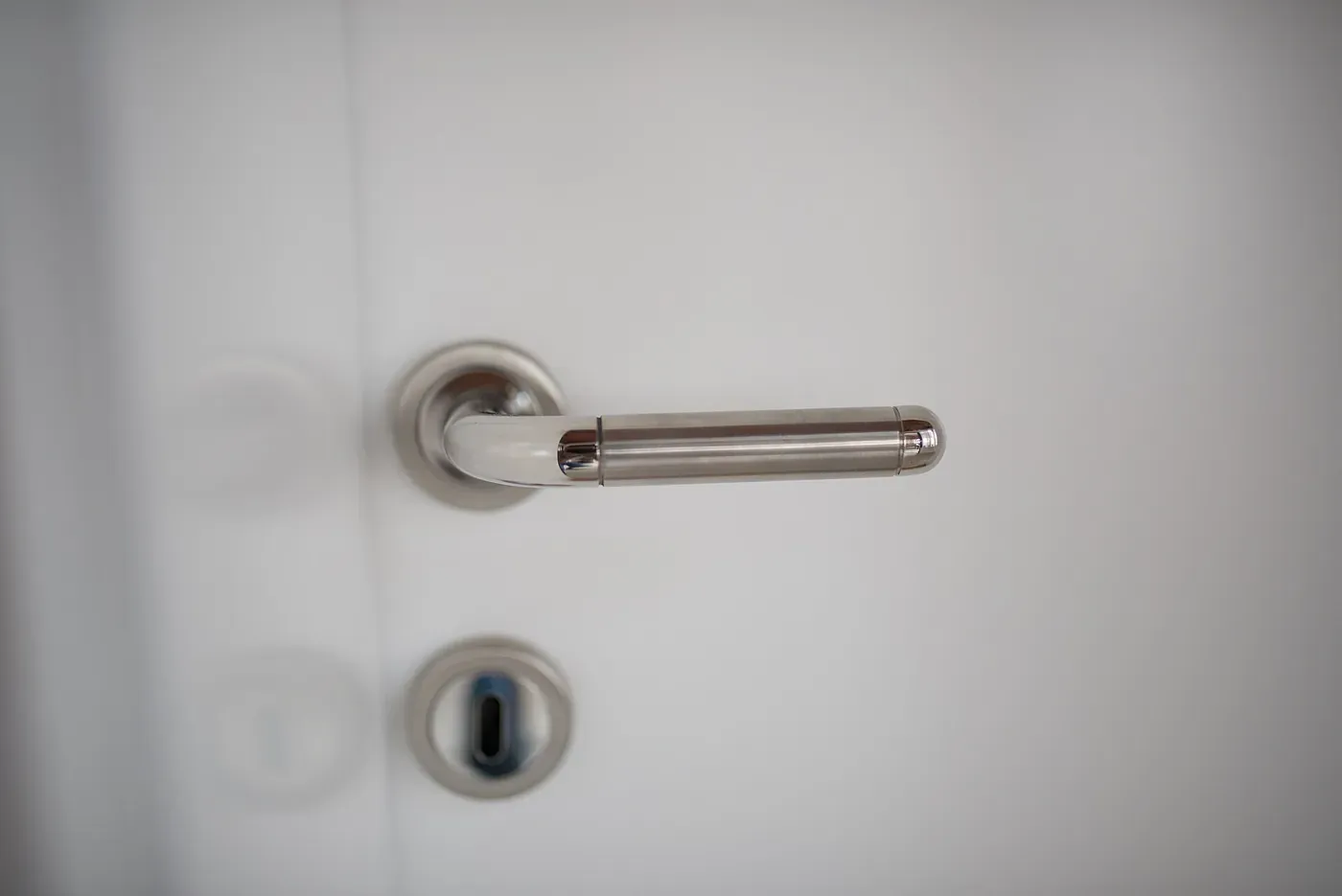
Notice when the resistance happens
Does the key enter fully? Does the problem happen with the door open, closed, or both? Can the inside thumbturn move the bolt normally? These observations help separate possible cylinder issues from the way the door meets the frame.
Stop using a key that appears bent or cracked. If a piece has broken off, leave improvised extraction attempts aside and describe how much remains visible. Mention any lubricant or other product already applied.
Look at the whole entrance
At an Old Worthington storefront, an attractive handle and an unreliable closing action can coexist. The cylinder, latch, strike, hinges, and closer perform different jobs. Replacing the visible lock alone may not address the actual fault.
For a home entrance, note any recent change in how the door sits or closes. Photographs of the hardware and frame can support an initial conversation, but the final repair scope may depend on seeing the components in place.
Ask what can be retained
A repair might involve adjustment or a replaceable component; other damage may call for replacement. Ask which part has failed, whether the proposed work addresses the symptom, and how operation will be checked afterward.
If the door cannot be secured, make that clear before discussing a routine appointment. Confirm availability, any assessment charge, and who needs to authorize work on a rented or shared entrance.
A few useful answers.
Should I force the door shut to turn the key?
Avoid using extra force as a workaround. Explain the resistance and whether it changes with the door open.
Can a broken key be removed without replacing the lock?
Sometimes, depending on the fragment and cylinder condition. Removal and any resulting repair should be assessed separately.
Does old hardware always need replacing?
No. Condition, compatibility, and operation matter more than appearance alone. Ask for the reason behind the recommendation.